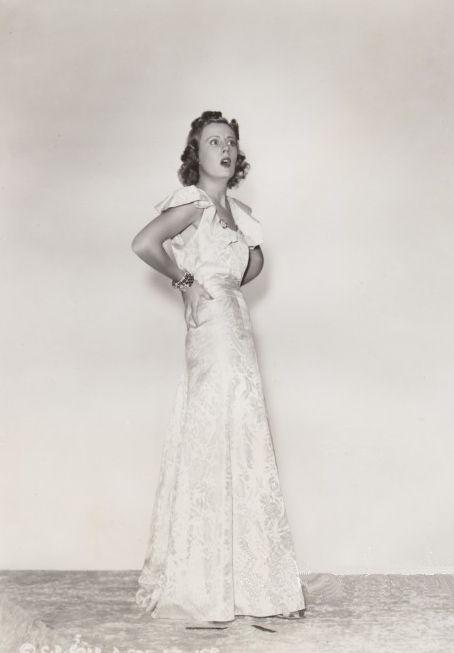
Showing posts with label Cary Grant. Show all posts

Saturday, April 14, 2012

Penny Serenade

La Dunne as Julie Gardiner Adams 

Release date 04.24.1941

"... for better, for worse, for richer, for poorer, in sickness and health, to love and to cherish, till death do us part."

At the brink of leaving her husband, newspaper man Roger Adams (Cary Grant), Julie (Irene) starts listening to records they collected through the years. Each song reminds her of a stage of their life together...

first encounter...

courtship...

marriage...

telling Roger the good news...

an earthquake and...

miscarriage and childlessness...

talking about adoption...

the first time meeting Trina ... 

at last the adoption becomes final...

happy times with Trina...

 and wordless after the blow of fate...

After these reminiscences we are back in the somber here and now with Julie waiting for old friend Applejack (Edgar Buchanan) to take her to the train. But when Roger comes home, it's obvious that they are not yet finished with each other, and maybe they'll get another chance...

The story of "Penny Serenade" radiates amiable normality. This is how life goes: happy and funny, sad and tragic, with lighthearted times and periods in which we get a lot more than we bargained for. Simply for a change it's nice that we are not with the rich folks, but with common people struggling financially. As much as I like the main part of this plot, I simply love how exemplary well filmed it is. What a gifted team and what a wonderful result!
A bunch of laurels - or more appropriate a bay wreath - goes to director George Stevens and cinematographer Joseph Walker. According to Irene, Stevens was a perfectionist who prepared meticulously each scene with his crew but did not need many takes. This precision and attention to details become apparent in the most interesting perspectives. 
One example is the scene in the train. At first we don't follow the newlyweds into the compartment. The door is half-closed, and we are in the situation of an almost voyeuristic onlooker which gives this scene intimacy and eroticism.

They are in, and we are out where we belong...

I slightly regret that we are allowed to enter the room now, but the whole mise-on-scène is a convincing proof why Old Hollywood didn't need nakedness to picture sexuality - of course allowed, marriage blessed  post-code sexuality. For all of us who didn't get that they did not solely hold hands on the train, we learn in one of  the next scenes that Julie is pregnant. Though our couple did not manage a honeymoon trip because of Roger's professional obligations they indeed succeeded in a partial wedding night - 100 miles long that is.

the end of the "wedding record"

Another of my favorite scenes is of course the first night as parents - have a look at how the doors between the two rooms are used as props here - and I'd like to add the scenery when they prepare for the legal adoption assuming that they'll lose Trina. Stevens keeps us consequently at a distance utilizing an angle from the stairs which only shows moving legs. All are very busy packing Trina's things; we don't see their faces, but only moments later we are confronted with Irene's face in close-ups. She runs to the window, and while    we can't see what's happening outside, her face tells the sad story of her daughter's departure. 


Did I ever tell you that I am very appreciative of Irene Dunne?

This mixture of distance and nearness is utterly effective. Moreover, cameraman Walker spoils us with a lot of beautifully photographed close-ups - which made selecting the screenshots for my Irene Dunne site a real difficult task. 

Did I ever tell you that I have a weakness for close-ups of Irene Dunne? 

I already gushed a lot about Cary and Irene - or Irene and Cary - and I certainly could go on about their performances in "Penny Serenade."
Grant's gained him his first Academy Award nomination, and the scene with the judge surely provides some of the most remarkable Cary Grant onscreen minutes. The guy really touched me, made me laugh, and convinced me completely in the whole rest of the story. Is there anything else I could expect from an actor?

The magnificent Mr. Grant really deserves a pic of his own. The close-ups were mainly reserved for Miss Dunne though. She had first billing, you know...

The idea of music as the golden threat for this story is not only a structure after my own heart, but gives Irene the opportunity to foreshadow each episode. These are the perfect moments for this fine-tuned actress with her expressive face. She and Cary Grant - both more on the restraint side of acting - avoid any maudlin. This story could have been a  rich source of schmaltz but what "Penny Serenade" offers is beautiful sentiment. 
Edgar Buchanan has some great scenes as Applejack - the nicest of scene-stealer's -and Beulah Bondi as head of the adoption agency throws in another solid performance. Maybe they could have found a better child actress for "Trina, age six" (Eva Lee Kuney), someone with a more convincing smile would have been nice. This fake of a grin looks scary, little Eva!

Mr. Buchanan at work...(and this is a typical ID gesture)

Up to this point I am really happy with this film, but here comes a personal difficulty. Normally, I don't watch the last minutes of "Penny Serenade" because I can't stand this phony Happy End. To "replace" one kid by another, and the assumption that this would "solve" all problems simply gives me the creeps. We just followed Julie and Roger for about two hours, learned that they were "meant for each other" (to stick to the songs), and when they start doing what they should have done a couple of days earlier - talk and share their loss and pain - the darn telephone rings and Miss Oliver (Beulah Bondi) offers a blond boy. Oh dear! 
I would have preferred a semi-open end; they start talking, descend the stairs, leaving us without any easy way out but with the awareness that they are once again on their way - together.
Well, as long as all I need to get my personal version is the stop button, that can't be a real problem, right?

The End à la Susanne

Monday, February 27, 2012

My Favorite Wife


Our magnificent leads in a publicity clinch   

Release date 05.17.1940

"Oh, by the way... how was my funeral?"
"Lovely! Dr. Blake preached a wonderful sermon."
"Oh, I wish I've been there!"

After seven years, Nick Arden (Cary Grant) has his wife Ellen (Irene) who allegedly drowned at sea declared legally dead because he wants to marry Bianca (Gail Patrick). Shipwrecked and by an off course boat rescued Ellen returns just in time to thwart the honeymoon. She follows the newlyweds in their hotel and as soon as Nick lays his eyes on her again he is sure that she is still the one and only. 

Who on earth is Bianca??

But how to break the news to Bianca who is preparing for the wedding night upstairs? "Sorry, marriage is off!" probably won't do ... poor Nick wanting to do the right thing for everybody just doesn't come around to utter the adequate words. Ellen decides to give him some more time and to billet on her own family as an "old friend from the South." 

"Hey Nicolas, honey!"

This not only gives her the opportunity to keep an eye on Nick and Bianca but to get acquainted with her two kids who are too young to remember her. When the right time comes, she'll tell Tim (Scotty Beckett) and Cinch (Mary Lou Harrington) that she is their mother. 
Probably even this confusing situation would be settled soon, if Nick wouldn't learn that Ellen was not alone on her island. She was kept company by handsome Stephen Burkett (Randolph Scott) - quite an "Adam" to Ellen's "Eve". The second round in the battle of sexes begins ... 

Adam, Eve and Nick

"My Favorite Wife" always does the trick for me - it makes me laugh and puts me in a light-hearted mood, which is certainly something very nice and pleasant to write about a film . The story is not exactly believable - not even Irene Dunne would look like Irene Dunne anymore after seven years on a desolate island, especially considering Irene's delicate skin - and Nick's and Bianca's relationship is kind of odd from the beginning. That guy doesn't have to think for a second to give her the boots, but, well , if somebody can make this plausible, it's Irene Dunne! However, this rather silly story provides the most wonderful vehicle for all kind of absurd, madcap situations, is nicely spiced with slapstick elements and handled by a cast in a genial mood. 

The radiant Irene

According to La Dunne, the idea behind "My Favorite Wife" was a sort of sequel to "The Awful Truth" which makes absolute sense and turns the last ten minutes when Irene once again ends seductively lolling in bed into an appropriate quotation. Because of an accident Leo McCarey was not in charge of the direction - this task went to the more than capable Garson Kanin - but produced "My Favorite Wife" and was in general around. Though not as sophisticated as its predecessor - the dialogue in "The Awful Truth" is simply wittier - they are both obviously products of the same spirit. 
Thus our protagonists pick up where they left off; mumbling there, come-hither glances here, repartee back and forth, long talk short - onscreen chemistry in full swing. No wonder Cary Grant described acting with Irene Dunne more like a long flirtation than work.

Well, we already know each other...

One Cary Grant mystery for me is that he stumbles from one ridiculous situation into the other without ultimately making a fool of himself; the entire time he is still absolutely attractive, adorable and no irritation arouses why Ellen wants her hubby urgently back, although he's a little bit slow and complicated about the "Bianca issue". That Nicky beats her with her own weapons and gets her eventually with a laugh leads to a nice tied game, and they end in the room in which direction they were moving all along - the bedroom.

Let's be serious about life...

Irene has a field day as Ellen Arden jumping on the sofa for a "how to tell Bianca" rehearsal - one of my favorite scenes - parading her thick Southern accent, and ogling Cary's Nick - this intelligent and sexy lady knows how to handle the male species! Quite wonderful about Irene's presentation is that she consequently seems to share her amusement with us. She had anyway a tendency to "tongue in cheek" performances - something which was not always appreciated by the critics, but an important reason why I love actress Dunne - and Irene's Ellen is the mistress of this tone. She obviously enjoys the situation - at least partly - which makes us accomplices because we share some fun while the other parties concerned still have to fight  the absurdity of life. When the script asks for some sentiment - for instance the scene in which Ellen tells her kids about her true identity - Irene quickly switches back to the general mood which defines her characterization. Her Ellen embraces the absurdity of her situation and laughs about it, which is almost irresistible. Anyhow, who does not want to share complicity with Miss Dunne? 

...but not heavy about it!

Beyond enjoying the cooperation with Cary Grant and Leo McCarey, Irene had another valuable reason to like this film - and as we know by now, she was a little bit particular about her pictures - but this one made her list because she liked the performances of the bit players. Especially the hotel clerk (Donald MacBride), the judge (Granville Bates) and the little shoe salesman (Chester Clute) create real showpieces. Their roles are almost more grateful than the parts of Gail Patrick and Randolph Scott, and if I regret anything about this film, it's the fact that two scenes were cut that probably would have been a chance for these two actors to show some more of their competent presence.

 Okay, Irene, you got me! Once again!!

"My Favorite Wife" this most delightful "prelude to a kiss" is one of my Dunne favorites and I bet this statement just took you entirely by surprise! 

Thursday, June 30, 2011

The Awful Truth - my favorite dialogue


Jerry: In half an hour , we'll no longer be Mr. and Mrs. Funny, isn't it?
Lucy: Yes, its's funny that everything is the way it is, on account of how you feel.
Jerry: Huh?
Lucy: I mean, if you didn't feel how you do, things wouldn't be as they are, would they? What I mean, things would be the same if things were different.
Jerry: But things are the way you made them.
Lucy: Oh, no. Things are the way you think I made them. I didn't make them that way at all. Things are just the same as they always were...only you are the same as you were, too...So, I guess things will never be the same again. Ah,...night.


Jerry: Good night....
Lucy: You are all confused, aren't you?


No, not after I wrote it down and typed it out! 

The Awful Truth

The Warriners

Release date 10.21.1937

Jerry Warriner (Cary Grant) allegedly back from Florida - he never left New York and we won't learn about the why and wherefore - is nonetheless slightly annoyed when he returns to an empyt apartment with a couple of friends. Where is his wife Lucy (Irene)? Entrance Lucy, surprisingly all dressed up and with her handsome singing teacher Armand (Alexander D'Arcy) in tow. Follows the well-known excuse of "the car broke down and we had to stay in an inn," and exactly when Jerry is on the brink to embark on an "I'm in the right" scene caused by jealousy, Lucy discovers that the oranges he brought her are not from Florida but from California! The hasty jump to conclusions of the Warriners ends with a divorce and a struggle about the custody for their dog, Mr. Smith.

arguing over Mr. Smith

Mr. Smith goes to Lucy with visitation rights for Jerry which means that he shows up frequently at Lucy's apartment. While waiting for her final decree, Lucy urged by her Aunt Patsy (Cecil Cunningham), starts dating wealthy Oklahoma farmer Daniel Leeson (Ralph Bellamy). Unsophisticated Dan soon proposes and is accepted by Lucy thus bringing Jerry completely to the scene.

Dan enjoys a hearty laugh...

He does the best he can to disturb the ongoing courtship, and in the proceedings it becomes obvious that he and Lucy are still very attracted to each other. Being a woman and therefore quicker about such things, Lucy knows that she loves this lunatic soon-to-be ex-husband of hers, and we could be heading in the direction of a reconciliation, if Armand wouldn't enter the scene...
Well, completely fed up now, Jerry decides to look for other female company and before long, he is involved with rich socialite Barbara Vance (Molly Lamont). The three months are over, at midnight the decree will be final, and Lucy visits Jerry at his apartment for a last farewell - still hoping that it won't be the last, though.

Sometimes it's hard to be a woman...

Accidentally she picks up the phone, and to destroy the suspicions of his fiancée Jerry passes her off as his sister. Turns out this wasn't such a good idea, because "Sister Lola" gets an invitation to a dinner party at Barbara's parents' house. That's the chance Lucy waited for and she not only shows up, but gives the phrase "to be the heart and soul of a party" a new and very peculiar meaning. To rescue the situation, Jerry drags her out of the house, and taking advantage of the situation, Lucy presses every button to lure him into her bedroom before midnight...

Irene Lola Lucy in action!

Much of the action was improvised and director Leo McCarey wrote parts of the script directly on the set, which gives "The Awful Truth" an unbelievable fresh- and directness. Though he left his actors room for spontaneity, McCarey defenitely knew what he wanted and this shows. Additionally, he had - due to his training in his earlier films - a knack for slapstick, which makes this movie a splendid mixture of witty dialogue and almost banal humor. Bedroom farces, sitting on handkerchiefs, toppling over chairs or other madcap scenery are neither exactly new nor sophisticated but how these situations are handled ,and by whom, cracked even me up  - decidedly more on the verbal side of humor.

The Warriners - slightly seperated

"The Awful Truth", this story about two human beings who get into a divorce not to lose their face and have to make fools of themselves not to lose each other in the end, is a lot, a lot of fun. This exemplary representative of the screwball comedy genre gained Leo McCarey a Best Director Academy Award.
On the set of her second comedy, Irene met the first of her two favorite leading men - Cary Grant (the other one was soon to come Charles Boyer). And as she told in an interview: "We just worked from the first moment. He's a generous actor. He can afford to be, any man that gorgeous, and who'd watch little old me?" (interview with James Bawden) Anyway, "The Awful Truth" certainly offers enough good reasons to watch "little old me." It's Irene Dunne at her comedic best, in an with an Academy Award nomination for Best Actress awarded performance, and if you want to know what all the fuss about her perfect timing is about, you just might watch this film. But of course, all of Irene's timing wouldn't work without someone like Cary Grant as counterpart - quite a master of timing himself that guy!

Little Ol' Me, Mr. Smith and Mr. Generous

If "The Awful Truth" is an example for timing it's as well an example for another difficult-to-explain-but-you-know-it-when-you-see-it term -- on-screen chemistry. Is it that the actors seem to be at ease with each other and at the same time there is an erotic tension? Is it repartee? Or simply bringing out the best as actors in each other? Seems to be all of this and a lot more!
However, what I simply love is Irene's and Cary's constant ogling each other. They react to their -once again expertly arranged entourage - and concurrently have a steady sort of private interaction going on. Irene Dunne and Cary Grant simply were a perfect match, last not least in their similar style of acting which looks so effortless and natural and was unfortunately of the Award Nominations amassing and not winning the statuette kind.
Those two human highlights are competently supported by Ralph Bellamy in one of these rather thankless  "the third part of a triangle" roles. But Mr. Bellamy - an utterly sympathetic actor - gives a charming performance, and his dance number with Irene, for which he had to practice a lot, is one of the (many) high points of the film.

Lucy and Dan trying a step or two...

Surprise, surprise! I love this film, and every time I watch it I discover a new facetious detail and an Irene qoute comes to mind: "It is difficult to make people laugh, but it is infinitely worthwhile. You have lengthened their lives, or you have made them happier, and that is important in itself."(The Sydney Morning Herald, June 1938) If this is true - and I have no reason to doubt Miss Dunne - I certainly owe Irene!

one of my favorite publicities
                                                         
 Some last words about the core of this blog - the one and only Miss Dunne. I'm convinced that Irene could have managed a career without any comedy ventures. She already had her place in Hollywood, and could have gone on solely with melodrama and musical, but I certainly like how the comedies broadened her image. This new genre offered her the opportunity to show some more facets: her sense of humor, youthful lightness, this delighful playfulness and last not least the simple fact that she was indeed a dish. The days of philandering on-screen husbands and lovers are gone by now - no more fighting for men but with relish fighting with them. And sex appeal, humor, warmth, the most wonderful throaty laugh and the steady impression that this woman is up to something make quite a nice armory in the battle of sexes.

Good night!

Tuesday, March 29, 2011

A Pause Before We Are Heading For Comedy

the radiant Miss Dunne in her mid-forties

Although we are only in 1936 and there are still 16 years to come of Irene Dunne in the movies, we are halfway through with our journey. In her first 6 years in Hollywood, five of them under her initial contract with RKO, Irene made about the half of her total of 41 films. This sheer amount deserves a look back before we are going to leave for the second half.

Today Irene Dunne is mainly remembered because of her comedies and as co-star of Cary Grant, which is justified and unjust at the same time. The expression “versatility” is never far away as soon as the name Irene Dunne is mentioned and the fundament of this is her early work. We have melodramas, musicals, conversation pieces in quick succession, and even a western and such an oddity as “Stingaree” found their place. Irene did sing Jerome Kern, opera, music hall ditties; played shop-girls, opera singers, a countess, a fashion designer, a steel mill worker's wife, a secretary and well-off Mrs. Jim Dunlap, just to name a few. In a year like 1934 movie-goers had the occasion to watch Miss Dunne in such diverse motion pictures as “This Man Is Mine”, “Stingaree”, “The Age Of Innocence” and “Sweet Adeline”, thus “Irene Dunne could do it all” was basically established in those early years. And another fundament was laid during that period, Irene's screen persona: ladylike, decent, a vital truthfulness. Those elements - versatility and a defined screen persona - were the ground to build on the next years of Irene's career.

Miss Sophistication in 1941

This ground was effectively, successfully and gratifyingly tilled in Irene's time as a freelance actress. Of course those years gave us the highlights and - not always but most of the times - the superior films. One reason for this is the simple fact that Irene worked with co-stars of the same league as herself; such names as Cary Grant, Charles Boyer - Irene's deservedly so favorite onscreen partners - or William Powell and Spencer Tracy only crossed Irene's path starting with 1937. This second career half bestowed us with wonderful scripts, an impressing list of accomplished directors and last not least a throughout beautifully presented and photographed Irene. Her image in those years is seamless, and the fact that Irene had her hand in picking scripts, the freedom to reject projects and director's approval certainly was part of this. Additionally Irene conquered the genre of comedy, which was the perfect playground to bring her delightful screen persona into full bloom. Especially the comedies took advantage of Irene's on screen and kindly correlating off screen image and deliberately spoofed it with Miss Dunne voluntarily going along.
In her forties, at an age when many actresses have to face a lull in their careers, Irene Dunne was flying high; her success at the box office reflected by her top spot on the list of Hollywood earners.

Those are all good reasons to concentrate on this later phase of Irene's acting career but this would be too narrowly considered. One shouldn't forget that Miss Dunne was already a star before she embarked on comedy; and though most of those early films don't offer the sophistication, wit, finesse of their follow-ups they offer indeed a lot of quintessential Dunne acting and singing.